.png)
NonoDaily
NonoDaily is a daily logic puzzle website where the player uses clues in a numbered grid to reveal hidden pixel art images. These puzzles are called 'Nonograms', also known as 'Picross'. This was a solo project created entirely by me.
Development Time: 7 weeks (January 16th, 2026 - March 9th, 2026)
Play on NonoDaily.comRoles Held: Game Designer, UI/UX Designer, Programmer
Interaction Design
Since Nonograms are an established type of puzzle, akin to Sudoku or Crosswords, my design focus was primarily on interface and usability. I put a lot of consideration into how interacting with the core mechanics such as drawing and erasing felt. I encourage you to open the website and try messing around with the various systems. There are too many game feel flourishes for me to list here! I also tried to include as many quality-of-life features as I could.
The challenge with introducing quality-of-life features is that you don't want to remove the core challenge from the game. The key is to differentiate between tedious tasks and thoughtful tasks. For example, I observed players would fulfill the requirements for a line, but not X-away the empty tiles. This was the perfect opportunity to add an 'auto-X' feature, where those empty tiles are automatically X-ed. For experienced players, this removes a minor inconvenience. Meanwhile, for new players, it helps them get over a common pitfall and better understand the logical process of the puzzle.
Structure and User Flow
The difficulty of the puzzles changes throughout the week. This is to encourage players of all skill levels to play. Sunday and Monday are easiest, Tuesday, Wednesday, and Thursday are medium, and Friday and Saturday are the hardest.
Being a daily game is a great way to encourage user retention. The 'share' button is also helpful, as it encourages people to compare high scores with their friends.
.png)
.png)
.png)
The general flow of the game. The player is presented with an empty grid. Once solved, they are shown a win screen with their time and their record time. An animation plays if they've achieved a new record. On themed days, a caption is shown, such as wishing the user a happy St. Patrick's Day. They are then given a share link, which copies their score and a link to the website, akin to Wordle or Connections. Finally, they are directed towards the archive, where they can play previous days' puzzles.
Graphic Design
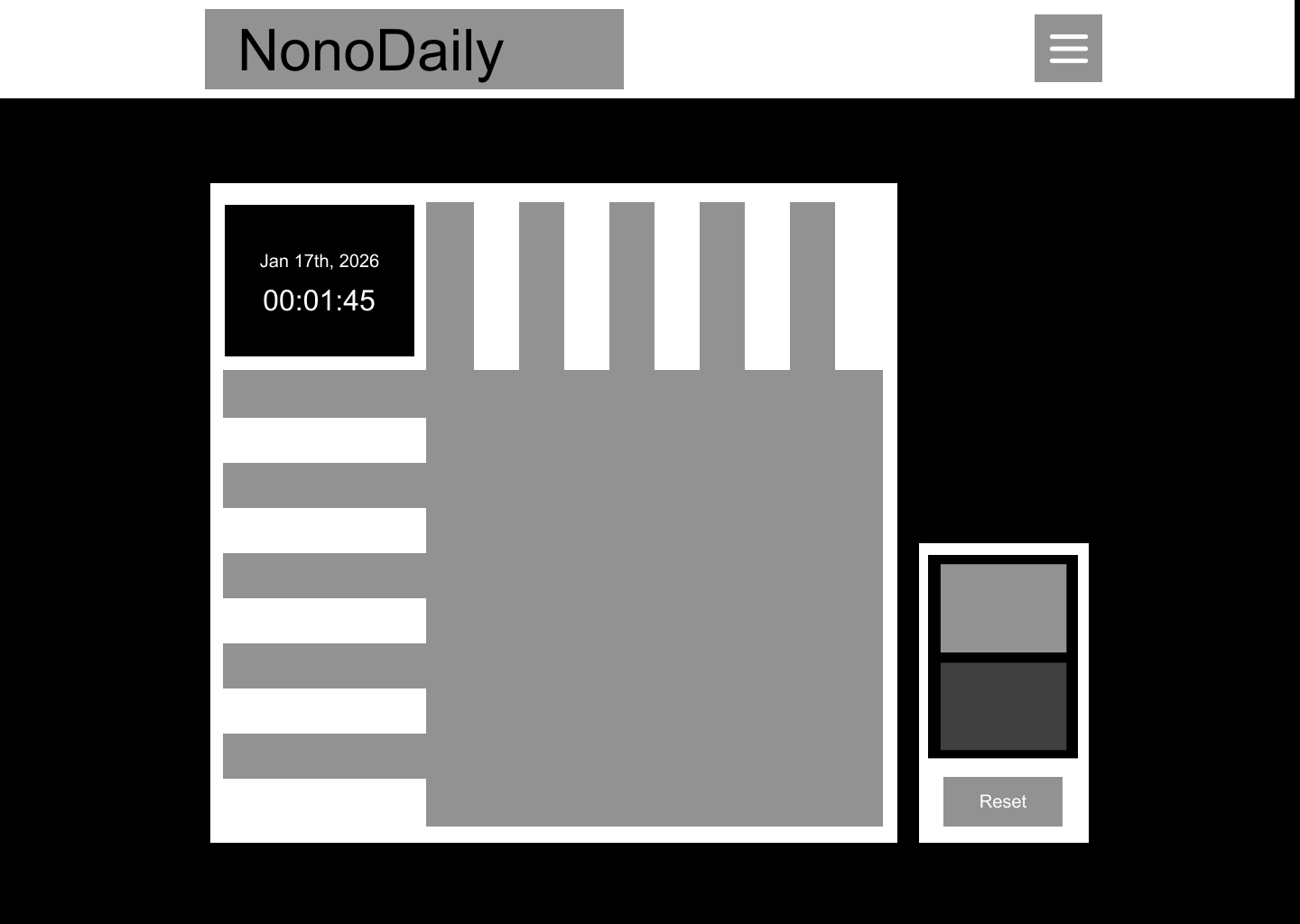
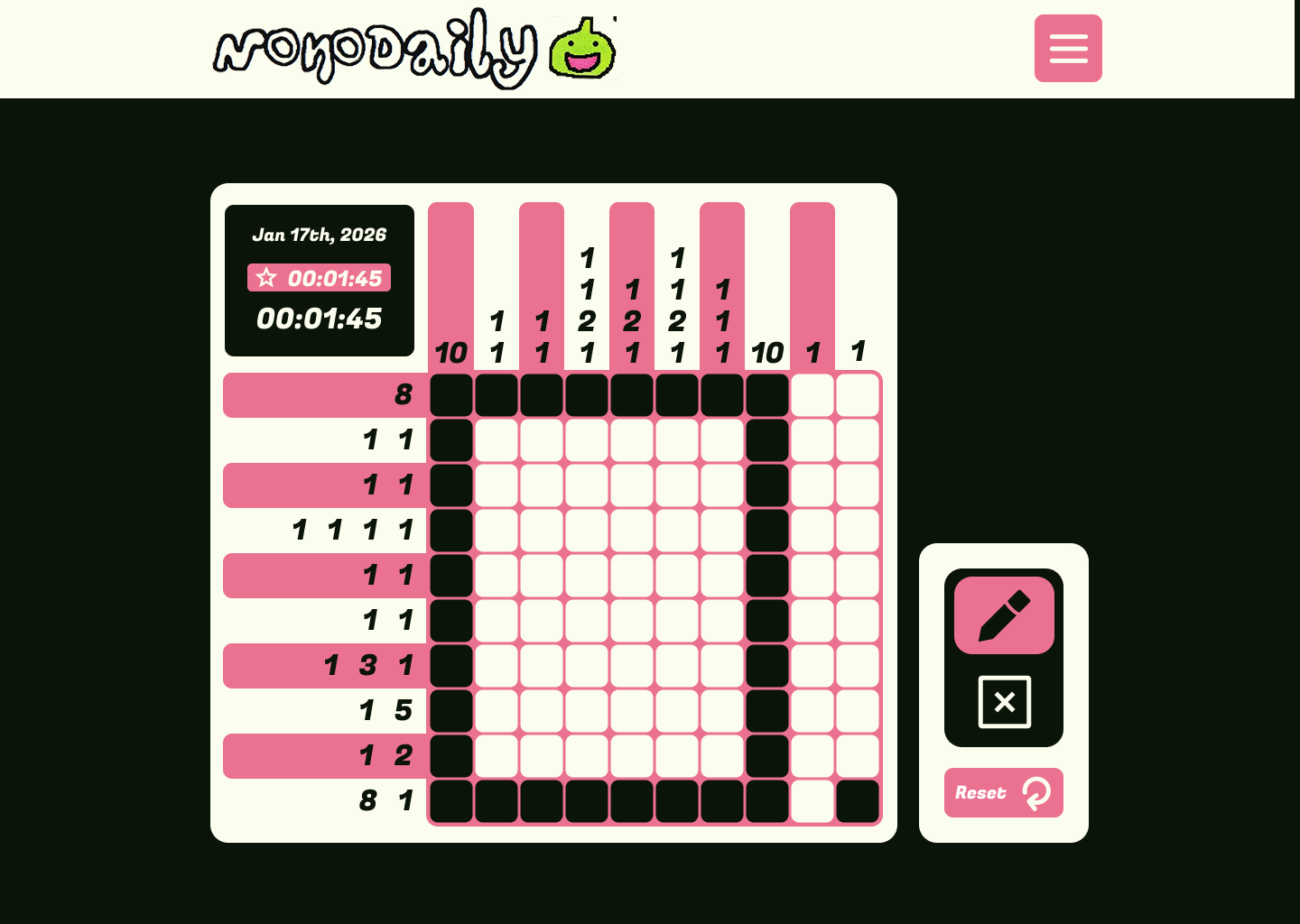
I first made mock-ups of the game using Figma. It needed to consider how the layout would work on both desktop and mobile. I also wanted to go for a unique aesthetic. The site's design is actually based on Tamagotchi marketing materials from the early 2000s, as I found their playful design and use of characters to fit the vibes of a casual puzzle game.
.png)
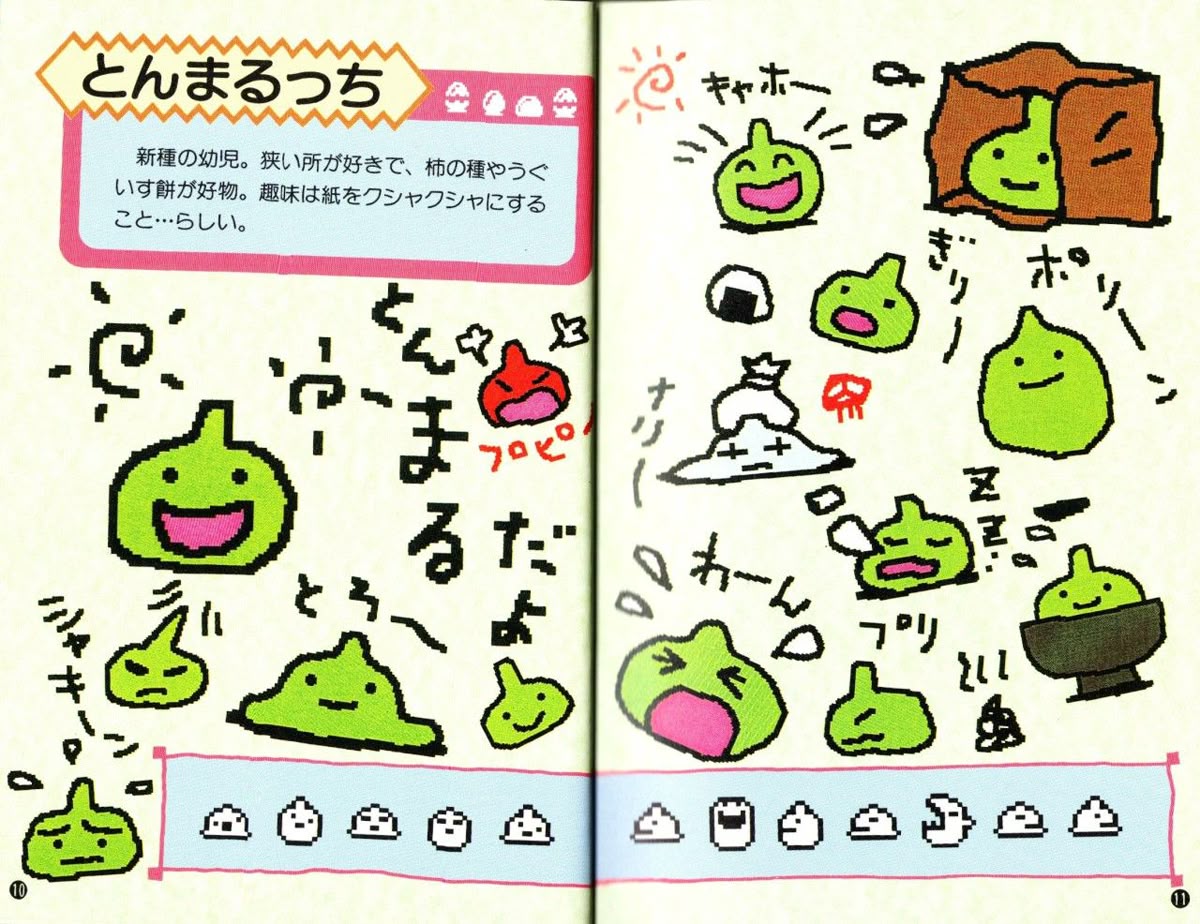
The wireframe, mockup, final implementation, and an example of the material that inspired my design.
.png)
.png)
The layout is adaptive to any aspect ratio or resolution. Here it is being played on a phone.
Reflection
Overall I'm very happy with this project. It gave me the opportunity to stretch my graphic design and JavaScript skills. I'm also proud of the quick turnaround time, with the project taking only 7 weeks to complete in my free time.